
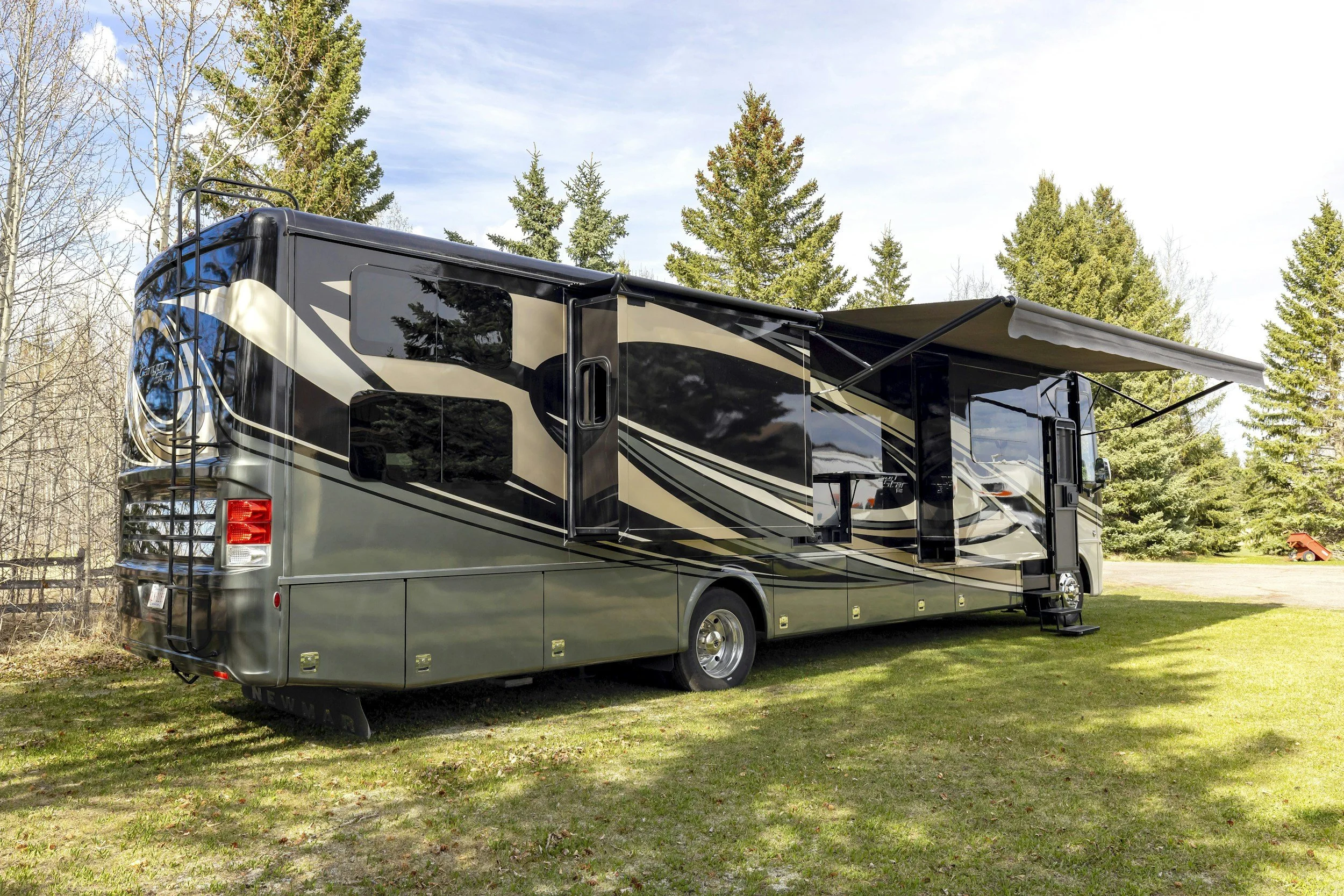
Sun-faded sidewalls, brought back.
Mobile RV and motorhome detailing across the Okanagan — at your storage yard, driveway or campground.
Class A · Class C · Fifth-wheels · Travel trailers
WHY GELCOAT MATTERS
We’ve been polishing gelcoat for years.
An RV sidewall is fiberglass under gelcoat — the same material as a boat hull. We've spent years correcting oxidised gelcoat on wakeboats and cruisers on Okanagan Lake, and the technique transfers directly.
That matters more than it sounds. Gelcoat isn't automotive paint. It's thicker, softer, and it chalks rather than swirls — which means the compounds, pads and pressure that work on a car will either do nothing or do damage. Burning through gelcoat on a 34-foot motorhome is a repair measured in thousands, not hundreds.
We know where the limit is because we work on this surface constantly.
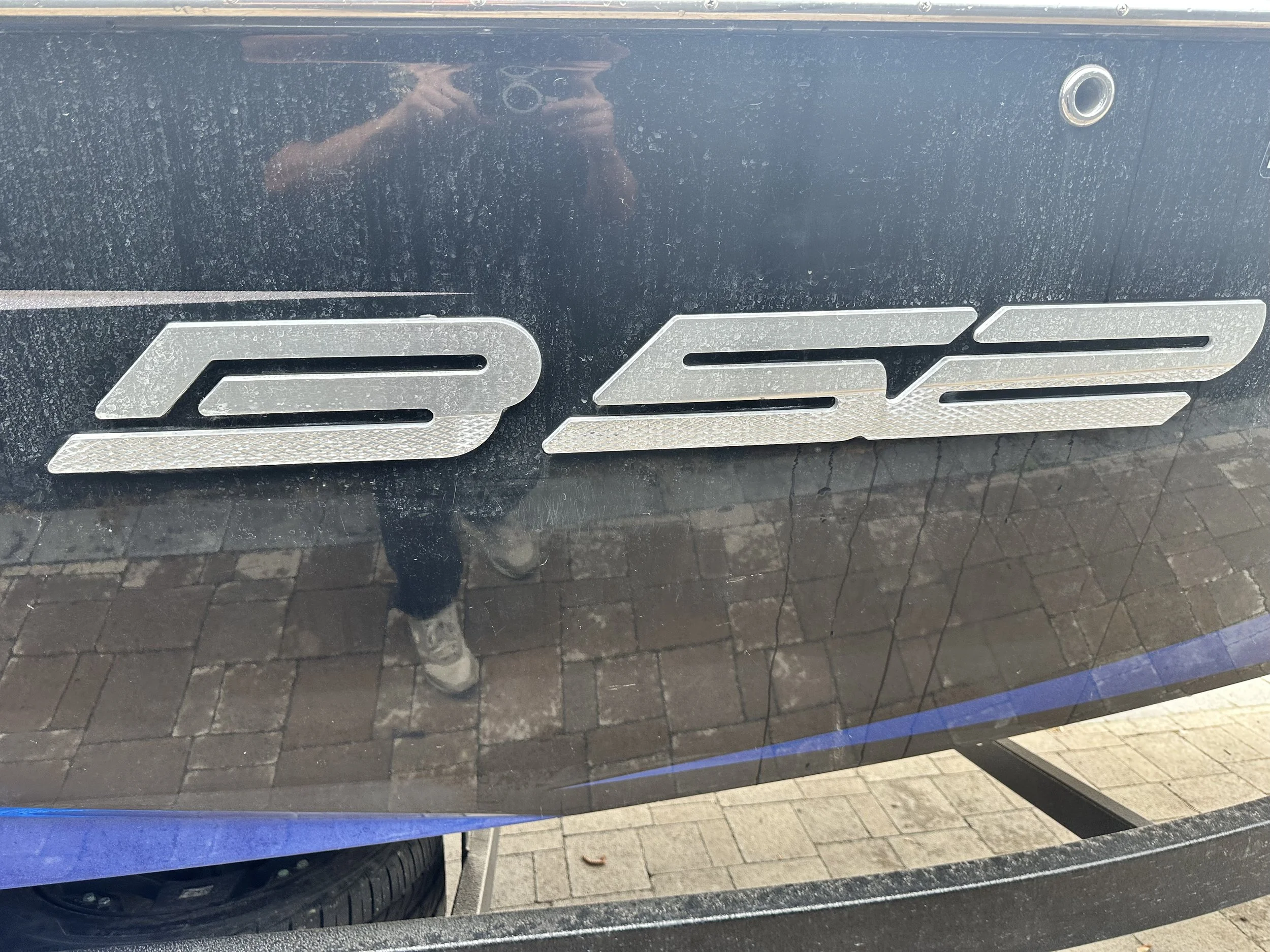
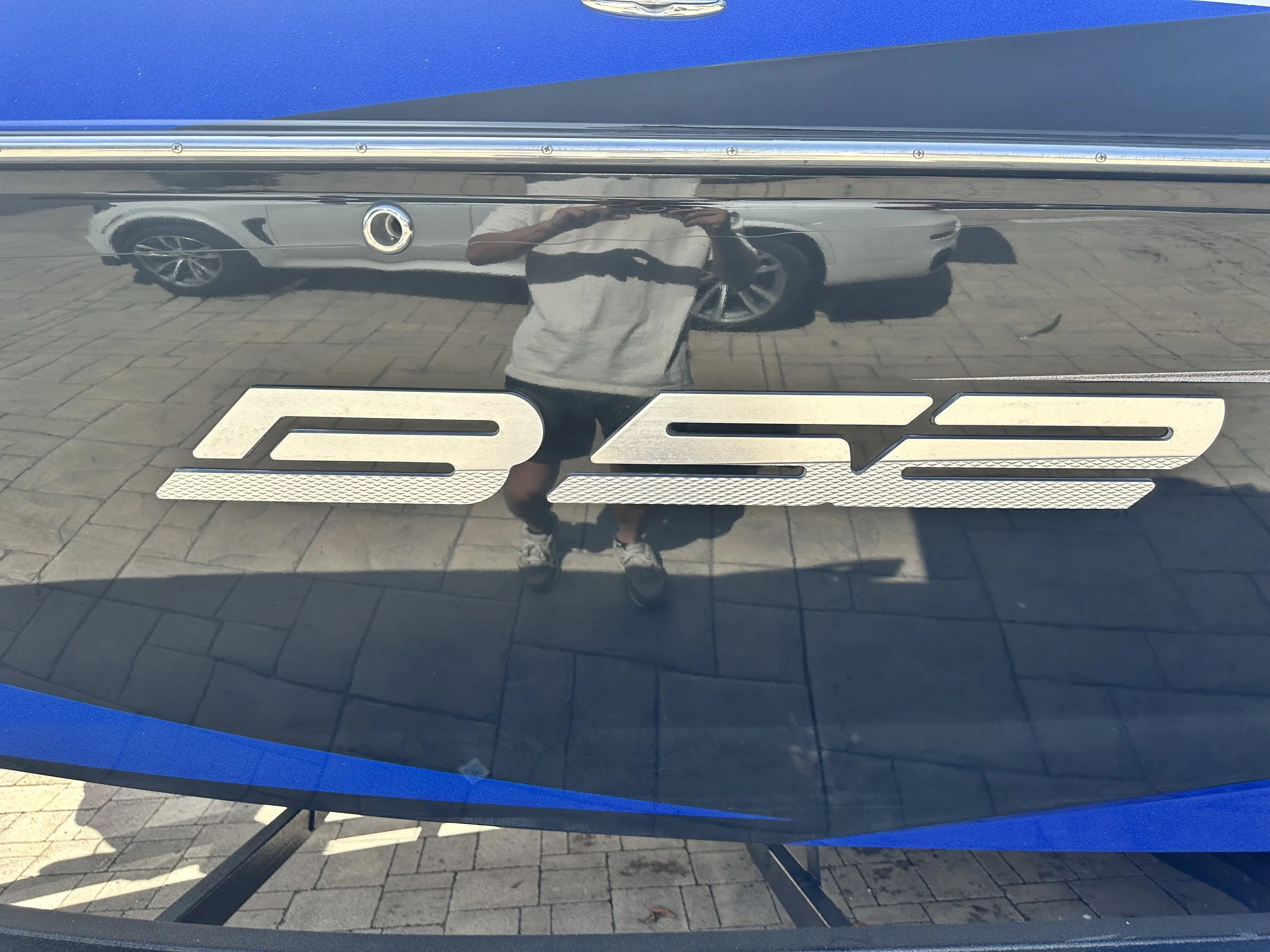
OKANAGAN SUN
That chalky white haze isn't dirt.
It's oxidation — the gelcoat surface breaking down under years of UV. Washing won't touch it. Wax over top of it just seals it in.
The Okanagan is about as hard on an RV as anywhere in Canada: intense summer sun, high UV at elevation, and long dry storage periods with nothing protecting the surface. Left alone, oxidation goes from cosmetic to permanent — once it etches deep enough into the gelcoat, polishing can't recover it and you're into a respray.
Catching it early is the difference between a polish and a paint job.
PRICING
Priced by the foot, measured bumper to bumper.
Condition matters as much as size. Send photos and we'll quote firmly rather than vaguely.
-
$10/ft
Hand wash, dry, roof rinse, wheels and tires, exterior glass, bug and sap removal, spray sealant.
-
$15/ft
Everything above, plus full black-streak treatment and roof deep clean.
-
$18ft
Full vacuum, all surfaces, upholstery, cabinets, appliances, bathroom, sanitisation.
-
$25/ft
Exterior wash and interior deep clean together.
-
From $30/ft
Machine correction back to gloss, then sealed. Two days on a full-size motorhome — this is the service that recovers a unit rather than just cleaning it.
Add-ons
Roof deep clean and treatment+$3/ft
Awning clean$99
Class A, fifth-wheel, or over 10ft tall+$3/ft
Ceramic coating on gelcoatQuoted
Example: a 30-foot travel trailer, exterior wash and black streaks — $450. The same unit with full oxidation correction — from $900.
THE PROCESS
Four stages, no shortcuts.
01
Wash and Decontaminate
Full hand wash, black streaks removed, surface decontaminated. Any grit left on the panel gets ground into the gelcoat the moment a pad touches it.
02
Test Panel
We correct a small section first to find the least aggressive combination that works. Starting aggressive is how people burn through.
03
Machine correction
Compound and polish by machine, panel by panel, until the chalk is gone and the gloss is back. This is the slow part.
04
Seal it
A durable sealant, or a ceramic coating if you want to skip annual polishing. Bare corrected gelcoat starts oxidising immediately.
We'll tell you honestly if your unit is too far gone. Gelcoat oxidised past correction can't be polished back, and we'd rather say so than hand back a marginal improvement.
THE SAME SURFACE
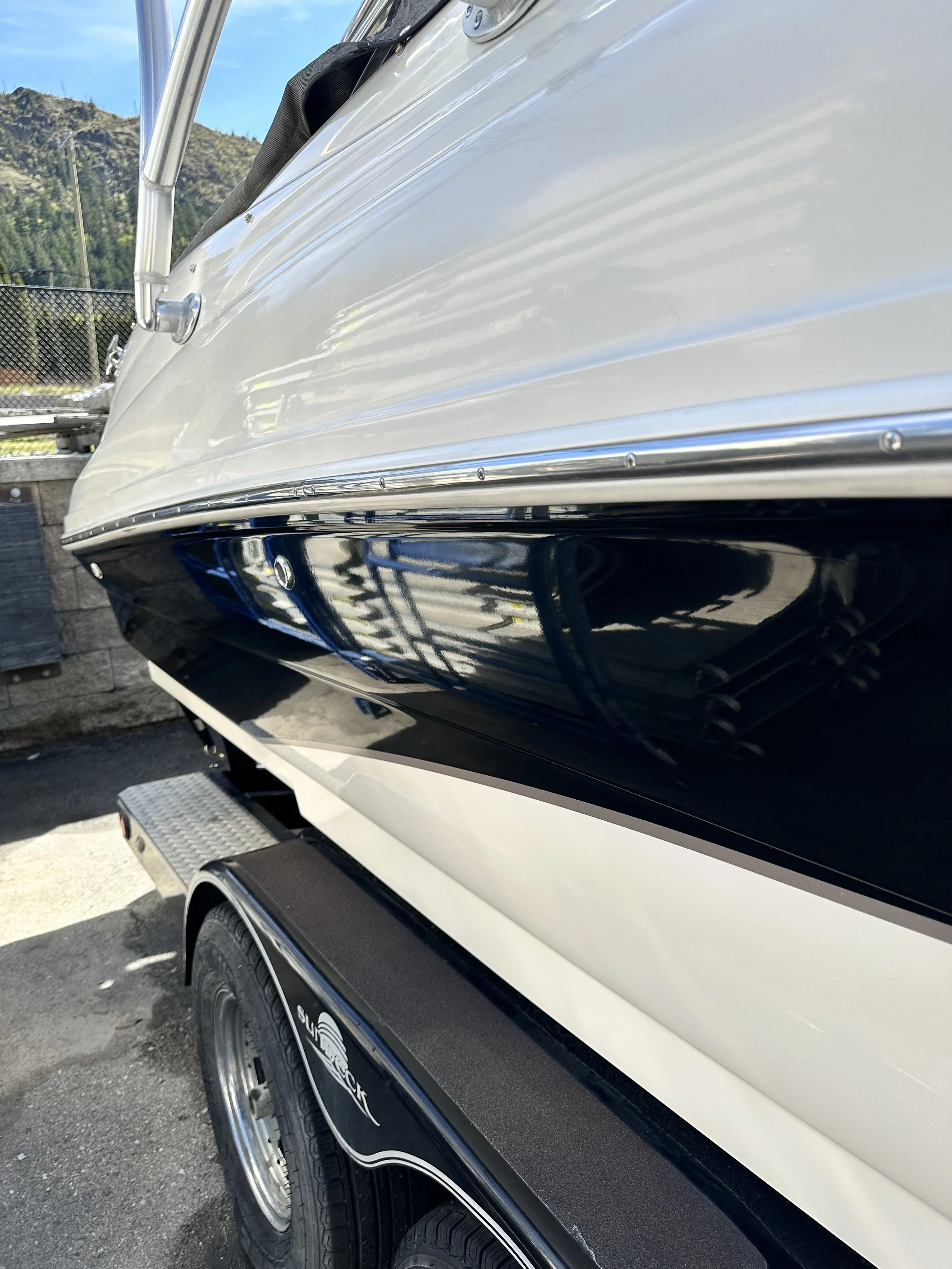
Oxidised gelcoat, corrected.
RV sidewalls and boat hulls are both fiberglass under gelcoat. The chalking is the same, the correction is the same, and the compounds and pads are the same. We've been doing this on Okanagan Lake for years.
These photos are from a boat, not an RV — we're showing them because it's the identical surface and the identical process.
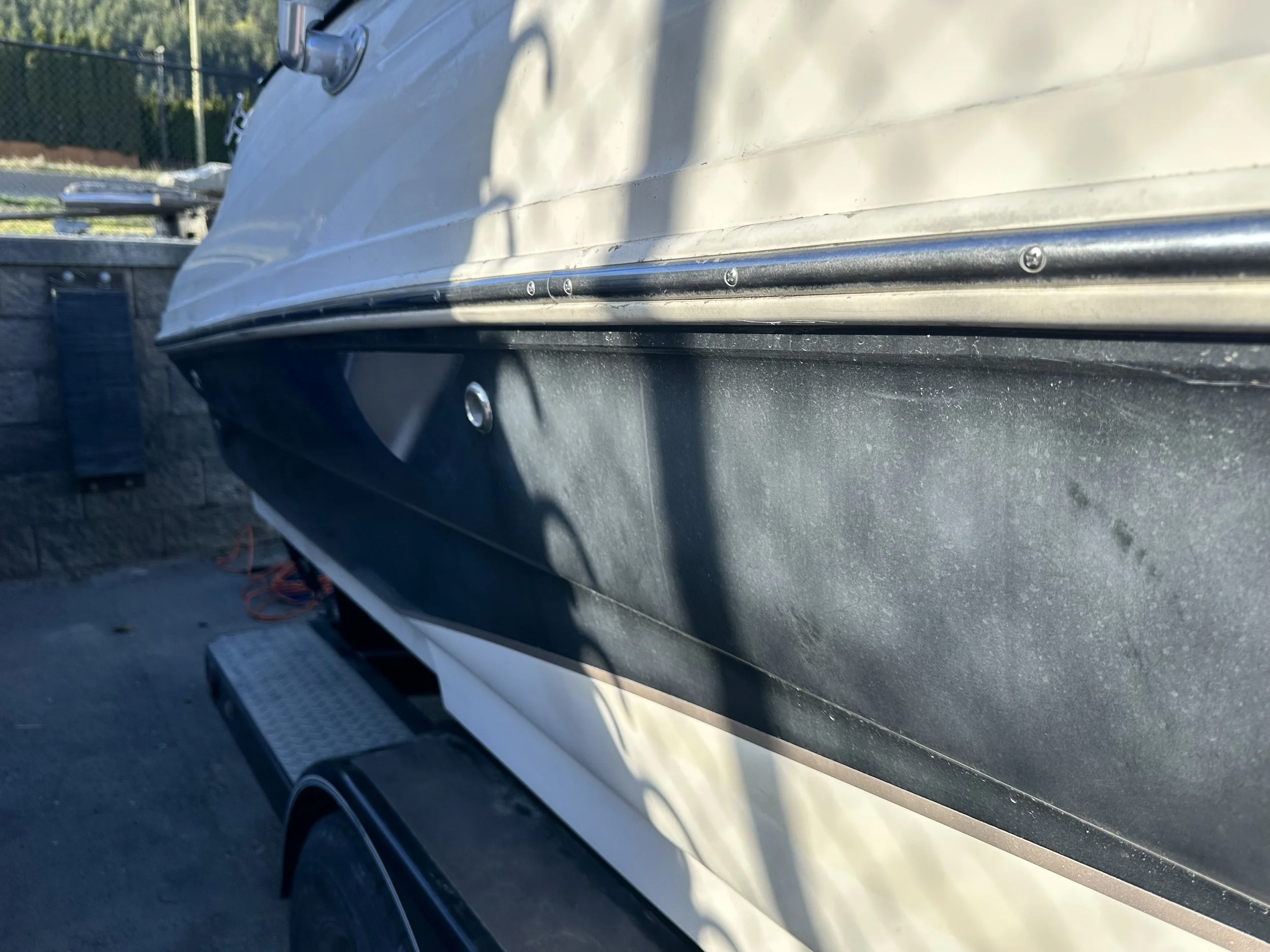
Before
Revived
FULLY MOBILE
We come to your RV.
Most RVs don't fit in a detailing shop, which is why most owners get told to drive somewhere or go without. We work on site — your storage yard, driveway, campground or seasonal site.
All we need is space to walk around the unit, an outdoor tap and a standard outlet. If your storage facility restricts washing, tell us when you book and we'll work around it.
No travel fee from Peachland to Lake Country. $50 to Vernon and Summerland, $75 to Penticton — waived on bookings over $750.
TIMING
Two moments worth booking.
Spring
Before the season
Winter storage leaves grime, mildew and streaking. A wash and polish before your first trip means you're not spending the May long weekend with a bucket.
Autumn
Before storage
The one most people skip. Sealing the gelcoat before it sits all winter is what prevents next year's oxidation. Storing a dirty, unprotected RV is how chalking starts.
BEFORE YOU BOOK
Common questions
-
Bumper to bumper, not the advertised model length. A 28-foot trailer is often closer to 31 feet in reality — we measure on site and quote from that.
-
A roof rinse is included in every package. A full roof deep clean and treatment is +$3/ft, and worth it — the roof is where most black streaking originates.
-
A wash on a 30-foot unit is most of a day. Full oxidation correction is two days, sometimes three on a heavily chalked Class A. We'll give you a realistic window when we quote.
-
Usually. Some facilities restrict washing or require you to be present — check with them, and tell us what they said when you book.
-
Yes, but the process is different — aluminium needs different products and can't be polished the same way. Send photos and we'll tell you what's realistic.
-
Usually the highest-return detail there is. A chalked RV reads as neglected regardless of mechanical condition, and buyers discount hard for it.
Tell us about your RV.
Type, length and where it's parked. Photos of the sidewalls help most — we'll come back within 24 hours with a firm number.